Redesign
Website redesign: what drives the cost, when it is worth it, and how to lose nothing on Google
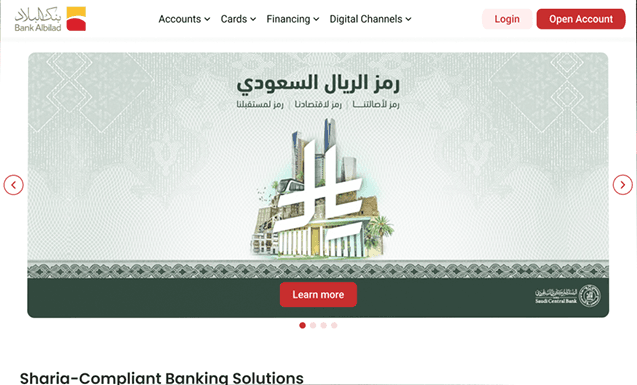
A redesign means rebuilding a site that already exists. It often costs almost as much as a new one, and it can lose in a few weeks rankings built over years. Done well, it does the opposite: more enquiries from the same visitors. This is what I explain to every client before starting one.
Do you really need a redesign?
A redesign is justified when at least one of these signs is there:
- The site is slow on phones, or badly displayed on mobile.
- Visitors arrive but do not call, book or buy.
- You cannot change your own text without going through someone.
- The site no longer says what you do today.
- It does not appear on Google for your trade and your city.
If only one of these is the problem, a targeted fix is sometimes enough: speed up the site, rebuild the home page, simplify the form. It costs less than a full redesign, and the audit shows it.
What drives the cost of a redesign
Published prices in Morocco range from a few thousand to over 100,000 dirhams, because “redesign” covers very different projects. Five things make the difference:
- Design only, or design and technology. Keeping the platform and rebuilding the pages costs far less than changing platform.
- How many pages are reworked, and whether the copy must be rewritten.
- Languages: an Arabic site needs a right-to-left layout, tested page by page.
- Features: booking, a store, a customer area.
- Carrying over SEO: page inventory, redirects, checks after launch. It is the line most often missing from cheap quotes.
For the ranges of a new site, which give an order of magnitude, see how much a website costs in Morocco.
Start with an audit, not with design
A redesign that starts from a mockup often repeats the same mistakes in nicer colours. I start by finding where visitors give up: navigation, home page, form, speed. For Bank Albilad, the audit found eight problems before any drawing; the detail is in the Bank ALBILAD case study, and a restaurant redesign is told in the ROAR Burger case study.
Keeping your SEO: the six steps
- List every current address, starting with the pages that get visitors from Google (Search Console shows them).
- Map each old address to a new one. A page that disappears with no equivalent should point to the closest page, not to the home page.
- Keep what works: titles and content of pages that already rank are not rewritten without a reason.
- Build the new site out of sight, on a test address closed to Google.
- Launch with the 301 redirects in place the same day, then submit the new sitemap in Search Console.
- Watch for four to six weeks: 404 errors, unindexed pages, rankings. Fix as you go.
The rule: no old address should end on an error page. Every broken link is a visitor and a bit of ranking lost.
The most expensive mistakes
- Changing every address without redirects.
- Leaving the test site open to Google, or closing the new site by accident.
- Deleting well-ranked pages because they “serve no purpose”.
- Launching on a Friday night, with nobody to check.
For estate agency sites, where hundreds of listings disappear with every sale, I detailed the method in redesigning a real estate site without losing Google.
What next?
An audit of your site before any redesign
Send the link to your site: I find where it loses visitors, and what needs a redesign or just a fix. See the website redesign page.
Sources: public price lists of Moroccan providers for the orders of magnitude, checked on 1 November 2026; Google Search Central documentation on URL changes and 301 redirects.

Hamza BenjaabaI audit and redesign sites (banking, restaurants, real estate, clinics), starting from where visitors give up, without losing the rankings already earned.
How it works
From one link to a site that brings clients.
One link and one line on what isn't working. No call needed to start.
Within 24 hours: the three things I would change first, the scope, the timeline and a price.
New pages around the action you want, a clickable version to test, then development.
Online, Search Console set up, Google Business linked, and the first pages written for real searches.